How to Stop Diesel Filter Regeneration Failures
- Vivek Bishnoi
- 4 days ago
- 9 min read

Updated: 3 days ago
Every new diesel truck has a part that catches black smoke. This part is called a diesel particulate filter. The filter cleans itself using a process called diesel filter regeneration. Sometimes this cleaning process stops working the right way. When that happens, the filter gets stuffed full of soot. A stuffed filter makes your truck lose power. Fixing this problem can cost a lot of money. But you can stop most failures before they start. This guide shows you easy habits that work.

What Goes Wrong With Regeneration
Diesel filter regeneration should burn away the trapped soot by itself. But the process can stop working for several reasons. The soot builds up inside the filter like dirt in a drain pipe. Soon the filter becomes so full that air cannot pass through. The engine then goes into a safe mode called limp mode. In limp mode, your truck can barely move forward. You might see black smoke coming out the back. A warning light will stay on your dashboard.
The High Cost of Ignoring Problems
Many drivers ignore the warning signs for too long. They keep driving even when diesel filter regeneration fails to work. This turns a small problem into a very big expense. A simple forced clean costs only a few hundred dollars. But replacing a ruined filter can cost five thousand dollars or more. You also lose money when your truck sits in the shop. Stopping problems early is always cheaper than fixing them later.
How a Clogged Filter Hurts Your Engine
When diesel filter regeneration stops working, exhaust has nowhere to go. The pressure grows inside the engine and breaks other parts. Your turbocharger can fail from too much back pressure. The engine may also push oil past its seals. These extra problems make the repair bill much larger. Many trucks have been ruined by simple filter neglect over time.
Why Diesel Filter Regeneration Fails in the First Place
Learning why failure happens helps you stay away from it. Most diesel filter regeneration problems come from how you drive. Short trips are the biggest enemy of diesel filters. City driving with lots of stops never heats the exhaust enough. The truck tries to clean the filter but cannot finish. Each incomplete clean leaves some soot behind. Over many weeks, this leftover soot turns into hard rock.
The Problem With Low Heat
Diesel filter regeneration needs very high heat to burn soot. The inside of the filter must reach over one thousand degrees. This heat only happens during highway driving or active cleaning. Short drives around town keep exhaust temperatures low. The soot never gets hot enough to burn away fully. Instead it bakes into a hard crust on the filter walls. Once that crust forms, normal cleaning cannot remove it.
How Ash Is Different From Soot
Two types of material clog your filter over time. Soot is soft and black, and diesel filter regeneration burns it away. Ash is gray or white and comes from engine oil. Ash never burns away, no matter how hot the filter gets. Every cleaning cycle creates a tiny bit of new ash. Over many years, ash slowly fills the filter forever. At that point, you need a professional clean or a new filter.
Easy Driving Habits That Work
Take your truck on a highway drive for thirty minutes each week. This gives diesel filter regeneration the time it needs to finish. Try to group your short errands into one longer trip when you can. Do not let your truck idle for more than five or ten minutes. Idling makes soot but does not heat up the exhaust. When you start a cold engine, drive gently at first. These habits cost you nothing but help your filter a lot.
The Once a Week Highway Rule
Pick one day each week to take the long way home. Drive at a steady speed over fifty miles per hour for thirty minutes. During this drive, diesel filter regeneration will likely start and finish by itself. You may not even notice it happening as you drive. The truck's computer handles everything without your help. This simple rule stops ninety percent of all regeneration failures. Every diesel truck owner should follow this rule.
What to Do on Short Commutes
If your drive to work takes less than fifteen minutes, you need a plan. The diesel filter regeneration cycle cannot finish in such a short time. Make sure to drive a longer way home twice each week. Add ten or fifteen extra minutes to your normal path. Use roads where you can keep a steady speed without stopping. Your truck will give you fewer warning lights and better fuel mileage.
Good Fuel Makes a Big Difference
Always buy diesel from busy gas stations that sell fuel fast. Fresh fuel burns cleaner and makes less soot for diesel filter regeneration to handle. Old fuel that sits in tanks for weeks creates more soot. Stay away from cheap stations that may sell low quality fuel. Saving a few cents at the pump will cost you in filter repairs later. Look for stations with many customers and a good name.
The Problem With Bad Fuel
Bad diesel fuel has dirt that does not burn completely. This dirt turns into extra soot inside your engine. The diesel filter regeneration system must work much harder to handle this soot. The filter fills up faster than normal and needs more cleaning. Soon the system cannot keep up and fails completely. Paying a few cents more for good fuel is worth the money.
Say No to Random Additives
Many fuel additives promise more power or better mileage. Some of these additives leave bad leftovers inside your filter. These leftovers do not burn away during diesel filter regeneration. Instead they turn into sticky goo that traps more soot. Only use additives that say they are safe for diesel filters. If you are not sure, check your owner manual or ask a good mechanic.
Watch Your Engine Oil Closely
Engine oil that gets into the exhaust is very bad for your filter. Oil burns into hard ash that diesel filter regeneration cannot remove. Check your oil level once every two weeks or before long trips. Do not fill the oil past the maximum line on the dipstick. Too much oil pushes oil mist into the exhaust system. Use low ash engine oil made for modern diesel trucks.
How Oil Gets Into the Exhaust
Worn piston rings or bad turbo seals can leak oil into the exhaust. This oil travels down the pipe and soaks into your filter. When the engine tries diesel filter regeneration, the oil burns into hard ash. This ash blocks the filter holes forever. Fixing oil leaks should be your first job. A good mechanic can check for oil use during regular service.
The Right Oil for Your Truck
Every diesel engine has a recommended oil from the maker. Look for oils that say low SAPS or low ash on the bottle. These oils make much less ash when they burn. Using the wrong oil can fill your filter with ash in just a few months. The money you save on cheap oil is nothing next to filter replacement cost.
Pay Attention to Warning Lights
Your dashboard gives clear signs when diesel filter regeneration needs help. Learn what each light means before a problem shows up. A yellow light with a filter picture means the filter is getting full. A flashing light means regeneration is happening right now. A steady light means you need to drive on the highway. A red light means you need help from a shop right away.
What to Do for Each Warning
When you see the steady yellow filter light, act fast. Drive on the highway for thirty minutes at a steady speed. This lets diesel filter regeneration finish by itself. If the light stays on after this drive, call a mechanic. Do not ignore the light for days or weeks hoping it goes away. The longer you wait, the more damage builds up inside.
Never Ignore a Red Light
A red warning light means your filter is very close to failing. Stop driving as soon as it is safe to do so. Driving more will force your truck into limp mode. In limp mode, your speed is limited and you cannot accelerate fast. You may not be able to drive up hills or get on highways. Call a tow truck to bring your vehicle to a repair shop. Forced cleaning may still save the filter at this point.
Professional Help That Stops Failure
Have your truck checked by a diesel expert once every year. The mechanic can see how much soot and ash has built up. They can run a forced diesel filter regeneration if the filter is somewhat full. This forced clean resets the system and stops future failures. Good diesel shops offer low cost inspection packages for all trucks. The price of a yearly check is very small next to filter replacement.
What Is Forced Regeneration
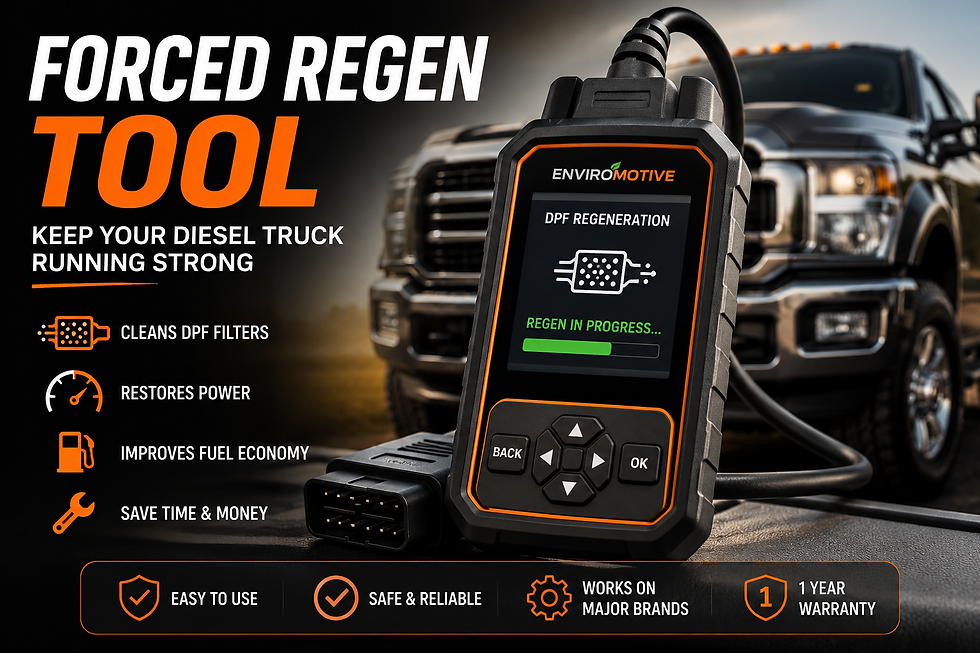
Forced regeneration is a manual clean started by a mechanic. The worker plugs a computer into your truck's engine. They tell the diesel filter regeneration process to begin while the truck is parked. The engine runs at a fast idle for about an hour to burn soot. This method works when automatic cleaning has stopped trying. Forced regeneration can save a filter that is not yet fully blocked.
When Deep Cleaning Is Needed
Sometimes so much ash builds up that forced cleaning cannot help. The filter must be taken off the truck for a deep clean. Enviromotive uses special tools to wash out both soot and ash. The filter sits in a chemical bath that breaks down hard deposits. After washing and drying, the filter works like new again. This deep clean adds years of life to your filter.
Long Term Habits for a Healthy Filter
Keep a simple log of your driving and maintenance work. Write down when you take highway drives and when lights come on. This log helps you spot problems before they get serious. Teach any other drivers who use your truck about these same habits. One bad driver can ruin a filter in just a few weeks. Make diesel filter regeneration health a team job.
The Ten Minute Idle Rule
Never let your diesel engine idle for more than ten minutes at a time. Idling makes soot but does not heat up the exhaust. This soot goes right into your filter with no heat to burn it. Long idling times are one of the fastest ways to ruin diesel filter regeneration. If you need to stay parked for longer, turn off the engine. Starting again uses very little fuel compared to idling for thirty minutes.
How Seasons Change Things
Cold weather makes diesel filter regeneration harder to finish. The engine takes longer to reach its normal working heat. Short trips in winter are very bad for your filter. In cold months, take longer highway drives more than once a week. Summer driving is easier on the filter because heat helps the clean. Change your habits based on the season for the best results.
When to Call a Repair Shop
Do not wait until your truck goes into limp mode before you get help. Call a diesel shop as soon as warning lights stay on after highway driving. A good shop can read the computer codes and tell you the problem. They will say if you need forced cleaning or deep cleaning based on your filter. Enviromotive has trained workers who know diesel filter regeneration very well. They can run forced cleaning and find deeper issues correctly.
What to Expect at the Shop
A mechanic will read the computer codes stored in your truck. They may run a forced regeneration using their diagnostic tools. The filter may need to come off for deep cleaning if very blocked. They will explain all your choices before doing any work on your truck. A good shop never pushes services you do not need. Enviromotive follows this honest way with every truck that comes in.
Final Easy Tips for Your Filter
Stopping regeneration failures is not hard or costly. You just need to drive on highways weekly and use good fuel. Watch your dashboard lights and never ignore a warning signal. Check your oil level often and fix any leaks quickly. These simple habits will keep diesel filter regeneration working for years. Your truck will run better, use less fuel, and stay out of the shop.
Conclusion:
Stopping diesel filter regeneration failures is very simple. Drive on highways each week and use good fuel. Never ignore your warning lights. Follow this guide and your filter will last many years.
Frequently Asked Questions
How long should my highway drive be?
Thirty minutes at steady speed over fifty miles per hour.
Can I drive with the warning light on?
Yes but only to reach a highway or a repair shop.
Does idling hurt my diesel filter?
Yes, idling makes soot without heat to burn it.
How often should I change my oil?
Follow your truck's manual, usually every five to seven thousand miles.
Can a fully blocked filter be saved?
Yes, professional deep cleaning can save most filters.